

Interview: "The NMO Must Adapt to a Rapidly Changing World"
Since its launch in 2025, the Netherlands Materials Observatory (NMO) has quickly built a solid foundation. In this interview, programme director Peter Paul van ’t Veen looks back on the results achieved so far and looks ahead to the future: from reliable information and explanation to action perspectives for government and industry.
The NMO was officially launched by TNO in February 2025, at the request of the Ministry of Economic Affairs. The knowledge centre helps the Netherlands gain a better understanding of dependencies in supply chains for critical raw materials, for which extraction, processing and production are highly concentrated outside Europe. In doing so, the NMO supports the National Raw Materials Strategy and the European Critical Raw Materials Act (CRMA), both of which aim to increase the resilience of the industry to disruptions in critical raw materials supply chains.
“The NMO’s emphasis is on gathering and making information available, providing insight and translating this into advice for various stakeholders.”
Within this policy context, the NMO’s focus is on knowledge and analysis. “The NMO’s emphasis is on gathering and making information available, providing insight and translating this into advice for various stakeholders,” explains Peter Paul van ’t Veen, programme director of the NMO. “It is not the NMO’s role to take measures itself, but rather to provide advice, evidence and guidance.” In doing so, the NMO focuses on the government, the industry, the academic world and societal organisations.
Value at multiple levels
In its first year, this role took shape through setting up the programme, establishing partnerships and organising governance. The NMO is now working hard to meet the information needs. An important milestone is the National Exploration Programme (NEP), a requirement under the CRMA. “We have taken the first step towards identifying the critical materials potentially present in the Dutch subsurface,” says Van ’t Veen. “We have made an initial inventory of possible occurrences of critical materials and made recommendations for further research. In doing so, we have focused primarily on areas where activities are already taking place and where critical materials might also be found. This is all still preliminary research. We will be expanding on this gradually in the coming period.”
In addition, the NMO produces material files. These provide insight into the availability, applications and strategic relevance of individual critical materials. Seven files are now available, and new files will be added regularly in the coming period. Furthermore, the first national list of 17 critical raw materials was published in July this year. “The national list is the result of an analysis by the NMO of the supply risks and economic relevance of the critical materials on the CRMA list, specifically for the Dutch economy, and forms the foundation for the further prioritisation of activities,” said Van ’t Veen. Initial results are also visible in other areas. For example, at the request of the Ministry of Foreign Affairs, the NMO is building international knowledge partnerships with countries including Canada, Chile, Vietnam and South Africa, and several reports have been published on the potential of recycling.
Together, these first results show, according to Van ’t Veen, that the NMO has made a strong start and is contributing in various areas: from structural knowledge-building to providing advice on urgent issues, such as trade restrictions imposed by China. “It is good to see that this is also appreciated by our partners, and especially by the people with whom we work closely.”
From information to actionable perspectives
The results achieved form the foundation for the next step. While the NMO is already collecting, interpreting and making information available, Van ’t Veen’s ambition is for it to focus on providing strategic advice. “‘It should not stop at providing information,’ he says. "The ambition is to then translate that information into advice on measures that really make a difference and, in the long term, actually reduce existing dependencies.”
“The ambition is to translate the information provided by the NMO into advice on measures that really make a difference and, in the long term, actually reduce existing dependencies.”
To take that step, collaboration is essential. The NMO works with ministries, companies, knowledge institutions and societal organisations, and builds on contacts with organisations including FME, VNO-NCW and the industry, as well as knowledge partners such as HCSS, CBS, PBL and universities. “Collaboration is extremely important for the NMO,” emphasises Van ’t Veen. “We have many different contacts with a diverse group of stakeholders and have built up an extensive network of parties around the theme of critical materials over the past year.” This collaboration also contributes to the development of a broad knowledge base. According to Van ’t Veen, the topic of critical raw materials has for years been carried by a relatively small group of specialists. “There needs to be a broader knowledge base of people who understand the complexity of this topic,” he says. “We must invest in this, particularly for the long term.”
That broader knowledge base is also needed across the board, also in the industry. Not only large companies, but smaller companies in particular need a better understanding of their dependencies. “The question is how we ensure that awareness, and subsequently that the necessary knowledge reaches the right level within companies”, he says.
Continuing to adapt
At the same time, the broad scope of the subject makes this a complex task. Critical raw materials touch on geopolitics, industrial policy, circularity, sustainability, mining, defence and international cooperation. “It’s a very broad field,” says Van ’t Veen. “The question is how, within the NMO and together with our partners, we can adequately cover that broad scope and continue to understand the complexity properly. The world is changing rapidly, and this topic is only set to become more important.”
That is why the NMO must continue to adapt to new questions, risks and opportunities. “We have achieved a lot in the past year and a half,” says Van ’t Veen. “More and more organisations around us are also taking action. The challenge for the NMO is to continue to provide direction and move with that dynamics.”
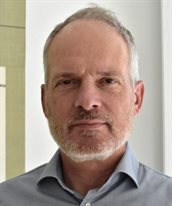
About Peter Paul van ’t Veen
Peter Paul van ’t Veen has been Programme Director of the NMO since January 2025. He focuses on the strategic development of the knowledge centre and represents the NMO in meetings with government, knowledge partners and other stakeholders.
With his background in applied research and extensive experience gained at TNO across various sectors, he is committed to further positioning the NMO as a knowledge centre for critical raw materials, with a particular focus on the international agenda and cooperation with other countries.