
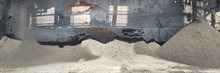
Bottom Ash Material Flows as a Potential Source of Critical Raw Materials
The Netherlands Materials Observatory (NMO) has examined whether the material streams generated during the separation and washing of bottom ash contain high concentrations of critical raw materials (CRMs). Bottom ash is the ash produced during the incineration of residual waste and contains a wide range of materials. Given the large volume of bottom ash that the Netherlands processes annually at various locations, bottom ash is, in theory, a significant source of CRMs.
Literature research shows that low concentrations of various CRMs are present in bottom ash. During the bottom ash processing, the ash undergoes various screening, filtering, magnetic separation and other separation steps. This results in various interesting material streams, such as gravel, sand, magnetic slag and non-ferrous metal (metal containing no or less than 50% iron). The research hypothesis was that CRMs would accumulate in these sub-streams, thereby making recovery easier.
Analysis of samples
At Heros Sluiskil, Europe’s largest bottom ash processor, a total of 32 different representative samples were taken and subsequently sorted into coarse and ground material. The remaining powder was analysed using Inductively Coupled Plasma Mass Spectrometry (ICP-MS) to determine the concentration of CRMs present. For verification, some samples were measured twice or analysed using X-ray fluorescence.
Results
The study shows that, for now, CRMs do not appear to accumulate in sorted bottom ash streams. However, some samples did show high concentrations of cobalt, copper and strontium, amongst others. As all results are based on a single measurement per material stream, further research is needed to confirm the results. After that, experiments can be conducted on the actual recovery of CRMs from bottom ash.
View the full results in the case study: ‘CRM content of bottom ash treatment material streams’.